What are Simpler Recycling regulations?

Simpler Recycling was introduced by the Department for Environment, Food & Rural Affairs on 31 March 2025. It’s designed to improve recycling rates and make it easier for households and businesses to recycle, by standardising recycling practices across England. It applies to both households and businesses.

The aim of the scheme is to reduce the volume of waste going to landfill, and, together with the changes to Landfill Tax, recycling rates should increase.

Watch our short animation to learn more about Simpler Recycling.


When does it come into force?

Simpler Recycling Graphic

21 October 2023

The Government announced new Simpler Recycling legislation.

31 March 2025

Businesses based in England with 10 or more full-time employees (FTE) had to separate dry recyclable materials (plastic, metal, paper and card), glass waste, and food waste from their non-recyclable general (residual) waste.

April 2025

Landfill Tax increase was implemented. This saw the Standard Rate of £103.70 increase by 21.6% to £126.15 per tonne and The Lower Rate of £3.30 increase by 22.7% to £4.05 per tonne.

February 2026

Environment Agency introduced non-compliance charges at £118 per hour, to cover their associated regulatory activity costs.

31 March 2026

Local authorities implemented weekly food waste and recycling collections for household properties.

April 2026

Further Landfill tax increases: The lower rate increases 113% to £8.65 per tonne and the Standard Rate increases by 3.6% to £130.75.

31 March 2027

 Small businesses with fewer than 10 full-time employees (FTE) employees will need to comply with Simpler Recycling legislation. 

1 April 2030

Mandatory collection of plastic film and flexible packaging will be introduced for households and businesses.

What waste must be separated from general waste? 

Food Waste Icon

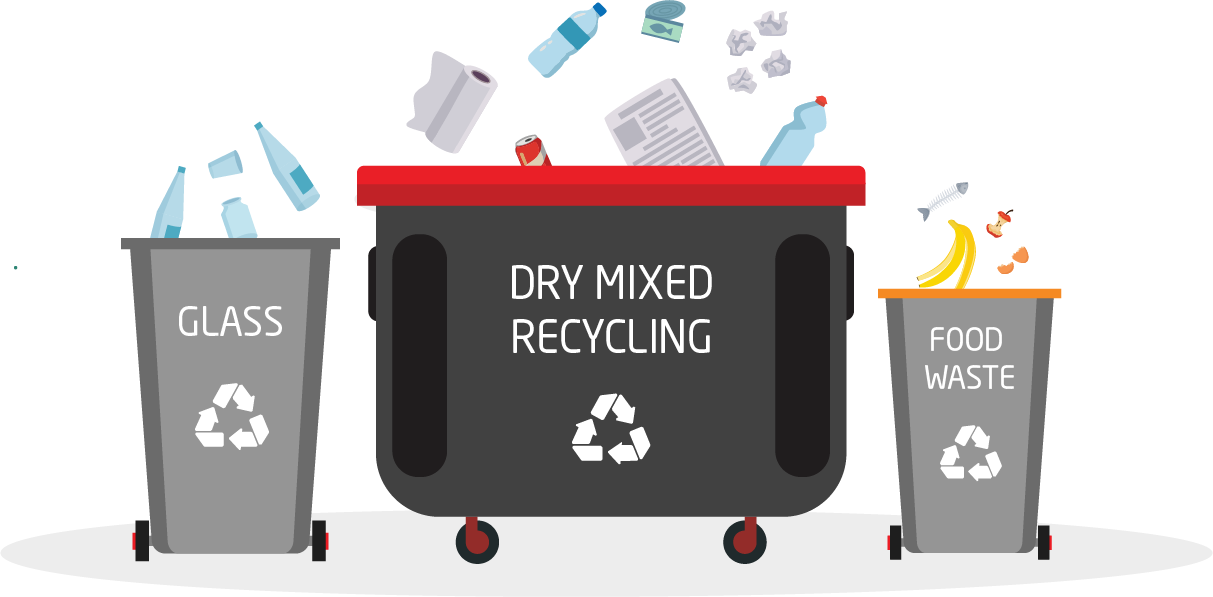
Food Waste – including kitchen scraps, old fruit and vegetables, bread as well as both cooked and uncooked food.

Glass Waste Icon

Glass Waste – including jars and bottles with lids, tops and labels.

DMR Icon

Dry Mixed Recycling – including drinks cans, aerosol cans, plastic pots, tubs, and food containers, plastic bottles, cardboard and paper.

How prepared are businesses? 

With the deadline for small businesses fast approaching, we recently conducted a survey to understand how prepared they are for Simpler Recycling and how we can help to support them during the transition.

The results were clear. Most businesses aren’t ready. In fact, only 17% of smaller businesses told us they are fully compliant with Simpler Recycling. Nearly 80% of respondents with under 10 employees said they didn’t currently separate food waste, and 25% of respondents said they have no plans to prepare for Simpler Recycling at all.

By 31 March 2027, micro-firms with fewer than 10 full-time equivalent employees will also need to comply with the Simpler Recycling requirements. It’s not optional. It’s set to be strictly enforced with penalties for non-compliance. Our survey also flagged that businesses need support. In fact, around 80% said they expected clear guidance and practical support from their waste provider.


That’s why we make Simpler Recycling as simple as possible. We provide clear, easy-to-follow advice and work with your business to arrange a waste collection service that suits your requirements and ensures you’re compliant. Call us to switch to Simpler Recycling today.


What do you need to do?

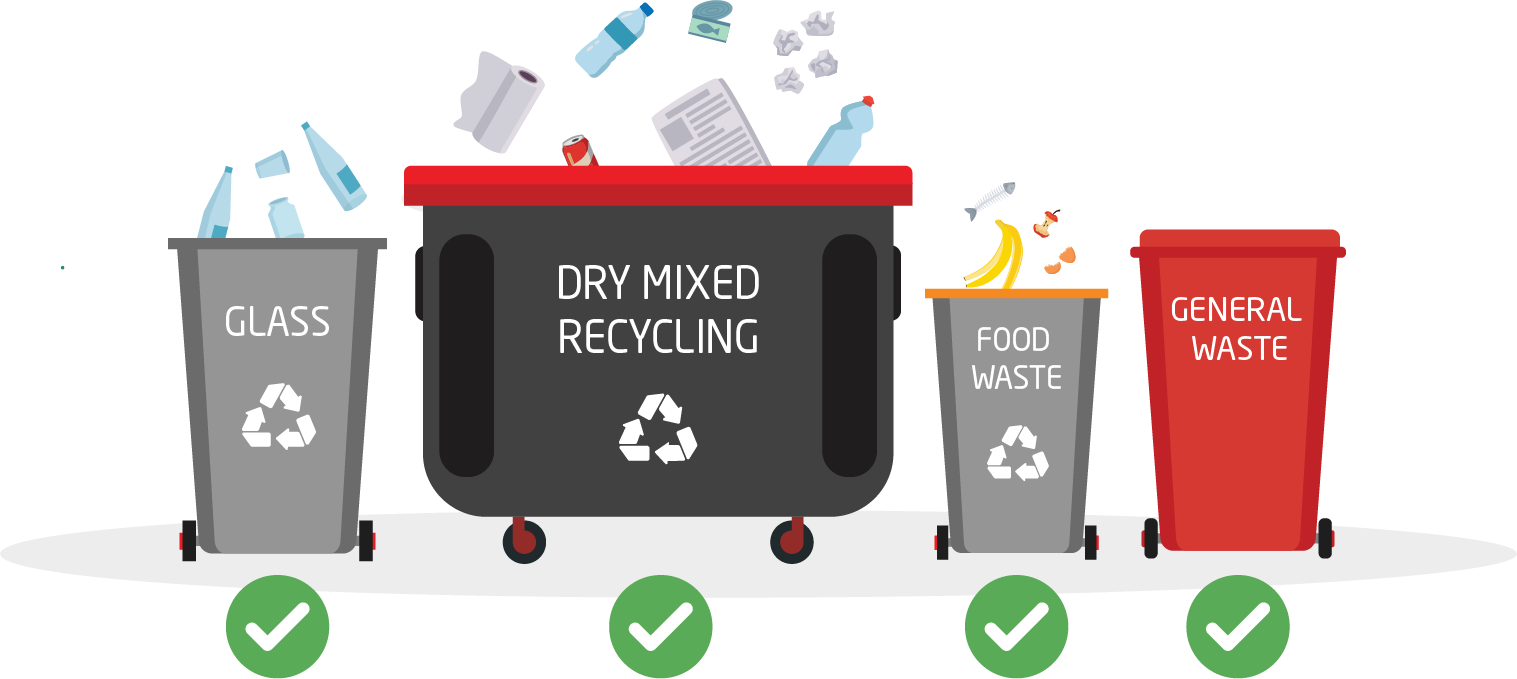
Your business must comply if it produces one or more of the following waste types:

Hills Waste Simpler Recycling Bins

Here’s what you should do:

  • Review your existing waste processes - how your waste is stored, separated and collected.
  • Audit the waste types that your business produces.
  • Train your team to confidently segregate waste and follow the new guidelines.
  • Add clear, visible signage to bins, making it simple for staff and customers to dispose of waste correctly.
  • Review your current waste collection contracts to ensure they’re fit for purpose.
  • Compare providers and secure quotes for Simpler Recycling collections.
  • If you’re switching providers, allow time to notify your current service and transition smoothly.

Download our Simpler Recycling Information Pack

Our free information pack provides loads of useful information for small businesses. In our pack you'll find:

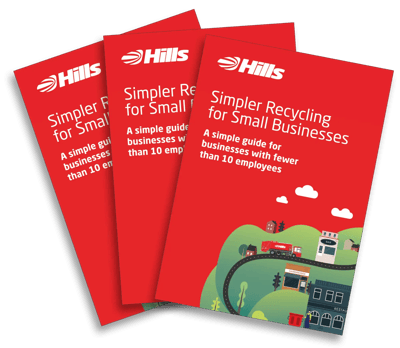
Simpler Recycling Bouchure

Simpler Recycling guide for small businesses


 Helpful information on what simpler recycling is and how it might affect your business.

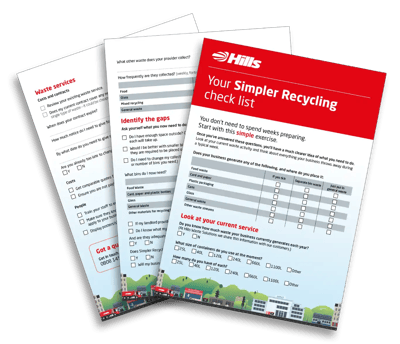
Simpler Recycling Checklist

Simpler Recycling checklist


To help you assess your own business, enabling you to work out what changes you might need to make.

Simpler Recycling Poster

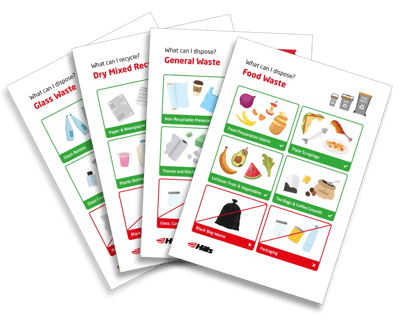
Simpler Recycling Posters


We've provided you with 4 posters to place indoors to help communicate to your employees how to segregate their waste.

To download your free Simpler Recycling Information Pack simply complete and submit the form below and we'll send you the Pack. 

The benefits to businesses

Asset 1@4x
Cost Savings
Reducing landfill waste lowers disposal costs, especially as landfill tax rates rise in 2026.
Asset 2@4x
Streamlined Waste Management
Clear guidelines and improved recycling processes make waste management easier and more efficient.
Asset 3@4x
Helps achieve sustainability goals
Simpler Recycling helps your business achieve its sustainability goals while fostering a greener future.
 

What happens if you don't comply with Simpler Recycling? 

On 3 February 2026, the Environment Agency announced that they would be introducing charges to organisations that fail to comply with Simpler Recycling legislation. The charges cover the work they have to do in relation to non-compliant businesses. This is a flat rate regardless of the size of business, so smaller businesses will feel the effects more should they choose not to comply with the regulations.


“Small businesses now have to take action by 31 March 2027 to ensure they are compliant with the regulations. And with recently introduced penalties for non-compliance, small businesses should embrace these changes. At Hills we make it easier to for businesses to purchase waste services online, at a time that’s most convenient for them.”


Caroline Wilde, Divisional Director - Commercial and Industrial, Hills Waste Solutions


How Hills Waste Solutions makes Simpler Recycling easy 

Fully Compliant: Our expert team will develop a bespoke waste collection schedule that will ensure you're compliant with Simpler Recycling Regulations.

Flexible: We'll review your service to ensure your collection schedule meets your business requirements.

With a "Great" rating on Trustpilot and a 97% success rate, join the 4000+ local businesses already using us for their waste management.

A guide to what waste goes in which container

Recycling (DMR)
Food Waste
Glass Waste
General Waste

METALStick-icon-green

  • steel and aluminium tins and cans
  • steel and aluminium aerosols
  • aluminium foil
  • aluminium food trays
  • steel and aluminium jars and bottle lids
  • aluminium tubes

tick-icon-greenPLASTICS

  • plastic bottles made of polyethylene terephthalate (PET, including amorphous, recycled PET), polypropylene (PP) and high-density polyethylene (HDPE)
  • pots, tubs and trays made of PET (including amorphous, recycled and crystalline PET), PP (including expanded PP) and polyethylene (PE)
  • PE and PP plastic tubes larger than 50mm x 50mm
  • cartons for food, drink and other liquids, including aseptic and chilled cartons
  • plastic film packaging and plastic bags made of mono-polyethylene (mono-PE), mono-polypropylene (mono-PP) and mixed polyolefins PE and PP, including those metallised through vacuum or vapour deposition (to be included from 31 March 2027)

tick-icon-greenCARTONS

Food, drink and other liquids, including aseptic and chilled cartons

tick-icon-greenPAPER and CARD

cross-icon-redEXCLUDES

Black bag waste (general or residual), hazardous waste, liquids, food waste, wood, and polystyrene

INCLUDEStick-icon-green

  • Kitchen and food waste
  • raw and cooked meat, bones, fat
  • non-packaged food waste
  • food waste in packaging
  • fruit and vegetables

cross-icon-redEXCLUDES

  • Black bags (general or residual)
  • dry-mixed recycling materials
  • hazardous waste
  • glass and metal

INCLUDEStick-icon-green

Clean mixed glass bottles and jars

cross-icon-redEXCLUDES

  • Windows and window screens
  • Pyrex
  • Drinking glasses
  • Ceramics
  • General waste, black bags
  • Food waste

INCLUDEStick-icon-green

  • Lightweight, compactable, dry, non-recyclable waste
  • Non-hazardous waste

cross-icon-redEXCLUDES

  • Food waste
  • Hazardous waste
  • Liquids
  • Paint tins
  • Batteries, electronic and electrical equipment
  • Rubble
  • Bulky waste
  • Clinical waste
  • Gas bottles
  • Mattresses and upholstered furniture
  • Fluorescent tubes

Landfill Tax Increases from April 2026

Following the March 2024 Budget announcement, Landfill Tax rates will rise significantly:

The standard Rate increases from:
£126.15 to £130.75 per tonne (+3.6%).
red_arrow
The Lower Rate rises from
£4.05 to £8.65 per tonne (+113.5%).
Landfill tax is charged to operators who may pass these costs on to businesses. These increases are still significant, so it's possible that businesses will receive larger increases in their disposal costs. As Landfill Tax only applies to landfill waste and not recyclables, encouraging better recycling habits should help reduce the impact of these changes. With Simpler Recycling legislation now in force, businesses must segregate their waste to avoid potential penalties. In doing so, landfill waste will be reduced and this may significantly lower expenses, especially for hospitality and food retail sectors.  These changes aim to cut costs and boost recycling rates.

Frequently asked question