
Northacre MBT Update 21 August 2026
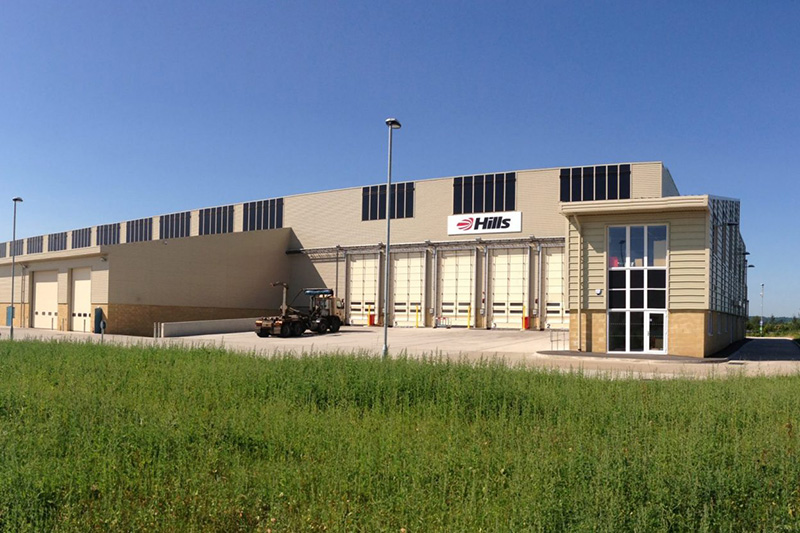
Monday 17 August saw approximately 100 people attend a public drop-in meeting at The Laverton, to share concerns regarding the Northacre Mechanical and Biological Treatment (MBT) facility in Westbury. Hills Waste Solutions, Wiltshire Council and the Environment Agency (EA) were on hand to answer questions about the plant.
This meeting gave Hills Waste Solutions the opportunity to explain to members of the public some of the technical and contractual matters relating to the plant.
Hills Waste Solution recognises that there is an impact from the facility and continues to liaise with the EA and Wiltshire Council on these matters.
Northacre MBT – Overview
The Northacre MBT opened in 2013 marking the start of a 25-year contract between Hills Waste Solutions (Hills) and Wiltshire Council. The facility processes around 60,000 tonnes of Wiltshire’s non-recyclable household waste each year to recover fuel for electricity generation and reducing the amount of waste sent to landfill.
How does the MBT process work?
Wiltshire Council’s kerbside collection vehicles tip household waste into reception bays before it is pre-treated in a rotating drum and separated into different sizes. The waste is then laid out in rows inside a sealed building, where natural microbes and airflow help breakdown and dry the material. This process takes up to 14 days, during which the waste loses up to 30 per cent of its original weight. Metals are removed for recycling, and the remaining material is made into Solid Recovered Fuel (SRF) for use in power generation plants, with some bio-stabilised residue sent to landfill.
What other waste treatment contracts does Hills have with Wiltshire Council?
In addition to the Northacre MBT contract which is due to end in 2038 – a second contract involves Hills transporting 50,000 tonnes of household waste to the Lakeside Energy from Waste facility in Slough (jointly operated by Grundon and Viridor). This 25-year contract is due to end in 2033.
Why is the Northacre MBT contract 25 years long?
Waste treatment facilities like the Northacre MBT are expensive to build and take several years to develop. Contracts are often long-term so the cost of building and running the facility can be spread over many years.
How will changes in national waste policy affect the Northacre MBT contract?
Councils now have to collect household food waste separately every week. In the near future, they will also be expected to collect more materials for recycling from the kerbside, including flexible plastics.
The government has given councils with long-term waste contracts more time to introduce separate food waste collections. DEFRA has agreed that Wiltshire Council can start in 2027. Dependent upon participation, food waste collections and other recycling improvements could reduce non-recyclable waste by up to 20,000 tonnes per year.
Proposed changes to the Northacre MBT contract
Considering the proposed changes to kerbside recycling in 2027, Hills is working with Wiltshire Council to review the Northacre MBT contract. The proposed changes are:
- Amend the existing contract so Hills can arrange for separately collected food waste to be processed at other specialist facilities.
- No separately collected food waste to be delivered to the Northacre MBT facility.
- Remove MBT processing equipment and operate the Northacre building as a transfer station.
- Waste would then usually remain in the building for no more than 48 hours, rather than the current 14 days, before being moved to another disposal facility. The volume of material stored at the facility will also be dramatically reduced.
- The combination of separate food waste collections and reduced storage times and volumes for waste is expected to reduce the potential for odour and other amenity issues at the facility.
Additional information
Hills is continuing to work with the Environment Agency and has agreed to reduce the amount of waste brought into Northacre from 300 tonnes per day to 215 tonnes per day with a view to reducing odour emissions.
Additional in-plant deodorising enhancements are being made at the plant along with the installation of further localised odour extraction measures.
The EA and Hills will continue to monitor the effectiveness of these measures.